Has your dog recently been referred for canine rehabilitation? Or, perhaps you didn’t receive a referral, but just wanted to explore this possibility on your own to help your pet recover from an injury or surgery. Whatever the case, when you work with Austin Canine Rehab, your dog will go through a detailed rehabilitation evaluation at the first appointment. Here’s a preview of what to expect:
Medical history and record review
A review of your daily life and your goals
Hands-on canine examination
Gait, posture, and functional movement assessment
Strength, mobility, and neurological evaluation
Review of findings with you
Home exercise program walkthrough
Wrap-up and next steps
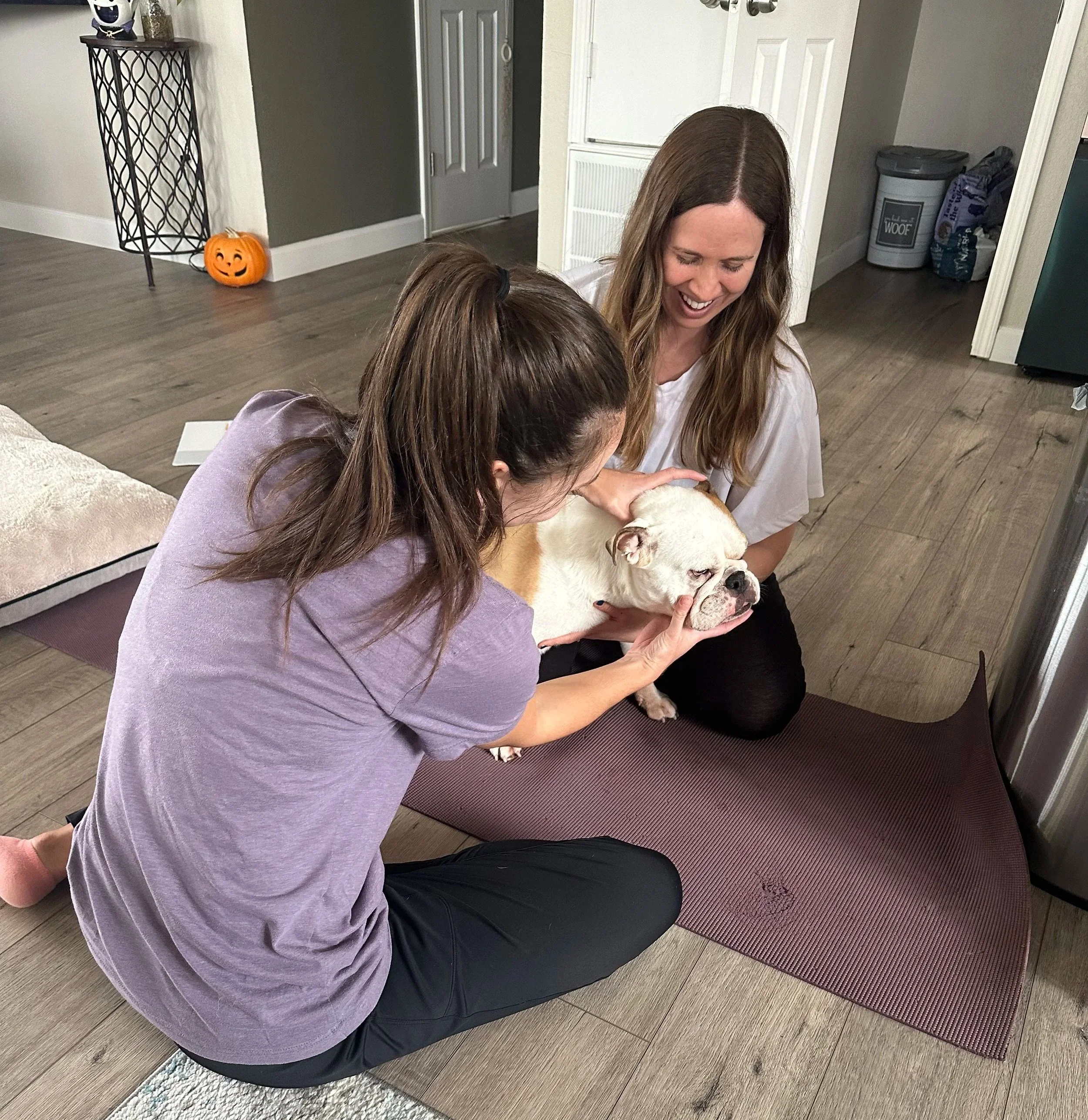
On the rest of this page, we will cover the details of a rehab evaluation, so you are fully prepared and know what to expect when the day arrives.
What Happens During an Initial Canine Rehabilitation Evaluation
During a canine rehab evaluation, our overall goal is to understand the full picture of how your dog is moving. We want to know where they are in their recovery or in the management of their condition, and what an appropriate rehab plan would look like for them.
This assessment is how we are able to customize all treatment plans, rather than taking a one-size-fits-all approach to treating dogs, which would not be as effective. Since we are a mobile practice, the evaluation will happen at your home, which is a comfortable and familiar environment for your pet, making the whole process far less stressful.[1]
Before the Appointment: Help Us Prepare for Your Dog’s Evaluation
There are a few basic things you can do to get ready for your appointment and make it as successful as possible:
Medical records. We will obtain records, but if your pet has been treated recently, please have those records available as well.
Space. Have a space clear in your home that features carpet, a rubber mat, or something else that will give your dog plenty of traction for the examination.
Collar or harness. Please have your dog’s collar or harness on before we arrive. A collar is preferred, when possible, as a harness can slightly interfere with the process.
Leash. Please also have a leash available for handling.
Treats and enrichment. We will want to keep your dog comfortable and happy, so having their favorite treats (in small pieces) available can help with engagement during the assessment. Something frozen to lick at can work wonders as well!
Minimal distractions. To the extent possible, please have other pets or small children elsewhere in the home so you and your pet can remain focused during the appointment.
We’ll Review Your Dog’s Medical History
The starting point for this evaluation is a review of your dog’s medical background. We want to understand the full context of what has led to this point, and what might be possible moving forward based on their history.
What Medical Information May Be Reviewed?
Each case is unique, but there are certain pieces of medical information that we will be looking for to understand your pet’s history:[2]
Diagnosis and relevant history around their condition, injury, or surgery
Imaging results, including X-rays, MRI, CT, or ultrasound
Previous treatments received such as surgeries, injections, and prior rehab
Current medications like NSAIDs, pain medications, and joint supplements
Vet notes and referral recommendations
Any recent changes to your dog’s symptoms or functional abilities
The Client Questionnaire Helps Us Understand Your Dog’s Daily Life
You know your pet better than anyone else. That’s why we have you complete a client questionnaire beforehand to get as much information as possible about your dog and how they are living currently. The questions you encounter on this form will target important topics like your dog’s daily exercise and activity level, the home environment, any current limitations, recent mobility and behavior changes, and your goals as an owner for your pet’s future.
Why Your Answers Matter During Canine Rehabilitation
While the evaluation we go through during our visit is comprehensive, we can’t replicate everything all at once. You are the one who sees your dog going through daily life, so you are the best source of information. The more completely and honestly you can fill out the questionnaire, the better we’ll be able to serve your pet.
The Canine Examination: What Will the Therapist Check?

Once we arrive at the hands-on portion of the assessment, we will be looking for a variety of specific things that help us understand your dog’s condition. Those include the following:
Pain and discomfort
Spinal mobility
Front and hind limb joint mobility
Range of motion
Flexibility
Muscle condition
Strength
Your Dog’s Gait, Posture, and Functional Movement Will Be Assessed
One of the most valuable parts of this whole process is when we have the opportunity to watch your dog move. During our gait and posture analysis, we’ll watch for compensations, asymmetries, and movement patterns that need to be addressed.
What Does a Canine Gait Assessment Look Like?
From the outside, a gait assessment looks rather simple. Basically, we are just watching your dog walk around at a relaxed, natural pace. As the dog walks, we are looking at things like stride length and symmetry, weight distribution, head bobbing, and posture. We’ll also be watching for the overall fluidity of movement and whether your dog looks smooth and confident in their walk, or guarded and hesitant.
Your Dog May Be Asked to Perform Simple Movements
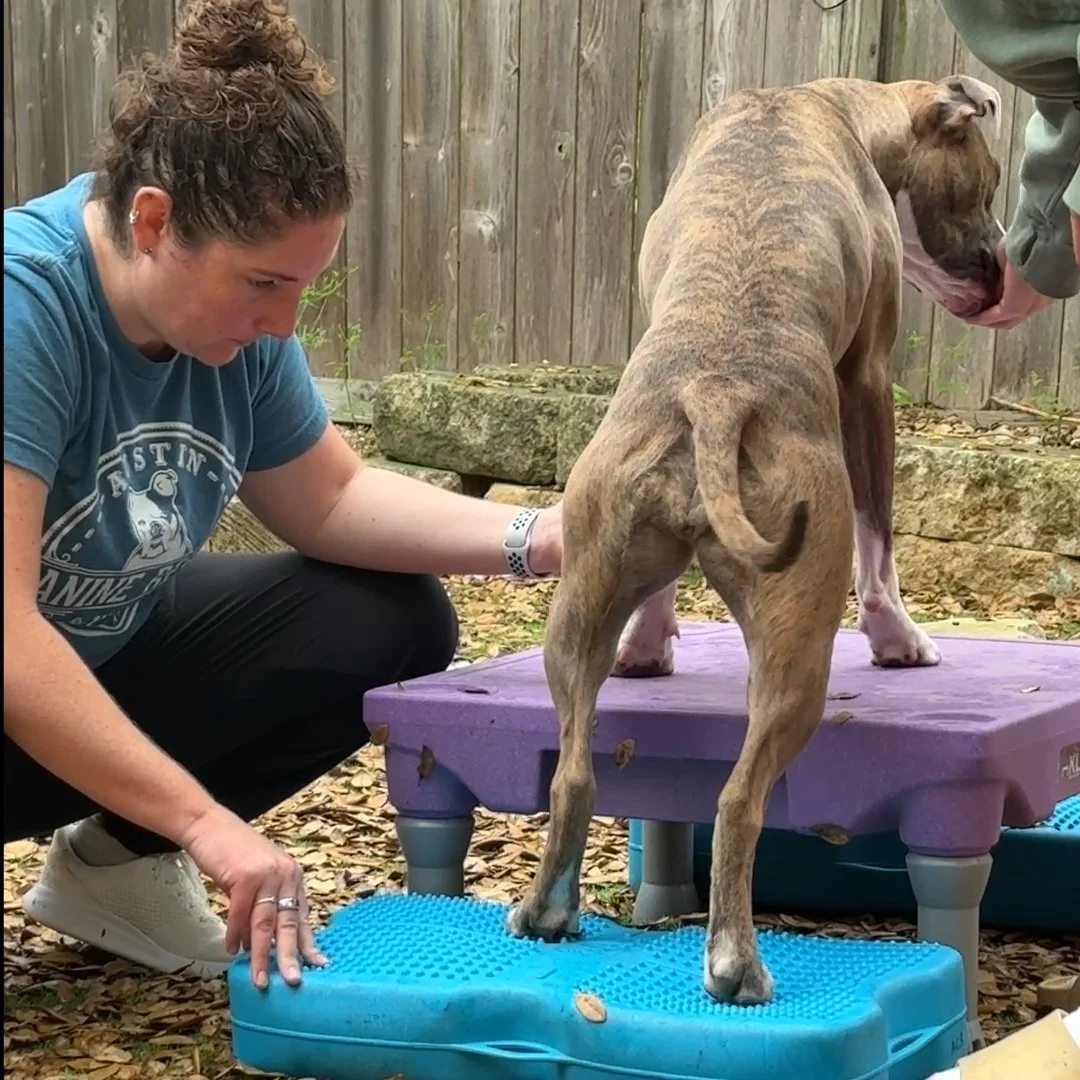
While watching your dog walk will tell us a lot, that’s not always the end of the movement story. In some cases, we’ll ask the dog to sit and stand, rise from a lying position, change positions on command, or even walk over low obstacles. None of the movements are particularly strenuous, but they can all help us see how your dog is able to use their body currently.
Strength, Mobility, and Neurological Function Are Also Evaluated
Beyond basic function, we’ll also want to evaluate your dog’s overall strength, mobility, and neurological function. Strength refers to your dog’s ability to generate force and support their body, while mobility is related to range of movement at the joints.[3] Often, improving joint mobility is a main goal early in rehab, because gains in that area can support so many other improvements.
Of course, neurological function should never be overlooked, as it assesses how the nervous system is communicating with muscles and limbs. There may be subtle signs of a neurological disorder present, so we’ll watch carefully for indicators like paws that knuckle over or reduced reflexes.
The Therapist Will Review the Findings with You
With the various parts of the assessment finished, we’ll be able to sit down with you and go over what we’ve found. Expect to have an honest conversation about everything we observed, and all of the information will be presented in plain language so you can fully understand the implications.
Creating an Individualized Canine Rehabilitation Plan
This is where everything we’ve done so far becomes actualized into a plan that can help your dog improve. The plan is going to be tailored to serve your specific rehabilitation goals, and it will work through a staged progression where the exercises get gradually more difficult as your dog’s strength and mobility improve. There will also be a follow-up schedule established to give you an idea of how often we want to see your dog moving forward.
You’ll Leave with a Home Exercise Program
We are going to provide you with a home exercise program that can be completed on your own time in accordance with a prescribed schedule. Before we leave, we’ll demonstrate these exercises and how they should be performed. We’ll also explain the purpose of the movements and what your dog is going to gain. Consistency in performing at-home exercises is one of the biggest factors in how much progress your dog makes.
What Happens After the Evaluation?
After the evaluation appointment, you’ll receive a copy of the findings so you don’t have to remember everything that was said at the time. We’ll also discuss things like follow-up appointments, your payment options, and how to reach us when any questions come up or if you notice changes in your dog.
What Should You Have Ready for Your Dog’s Initial Evaluation?
We’ll come to your home for the evaluation, and there are a few quick things you can do to make sure the house is ready to have the assessment completed as successfully as possible.
Prepare a Safe, Tractioned Space
It’s important to have a safe, clear area of around six feet by six feet where the evaluation can be performed. Ideally, this will be a carpeted space, as carpet offers great traction for a dog. If you have hard floors in your home, place a yoga mat, rubber mat, or area rug in an open space to use for this session.
Minimize Distractions
If you have other pets or young children, please make accommodations to have them in another part of the home with another adult. Creating a calm and focused environment will help your dog settle and will help us get an accurate picture of how they move during normal conditions.
Have High-Value Treats or Enrichment Ready

One of the most useful things you can do is have a frozen Kong filled with something tasty, a lick mat, or a few of your dog’s favorite small treats available. These can help to keep the dog engaged during the exam and will make the whole experience more enjoyable and positive.
What About Medications Before the Evaluation?
In general, please continue to administer your dog’s medications as prescribed, including pain medications. The only exception to this plan would be if your veterinarian has specifically directed otherwise. Also, if your dog has been prescribed sedatives for vet visits, please make sure those are given before we arrive.
How Long Does an Initial Canine Rehabilitation Evaluation Take?
You can expect this appointment to take approximately 90 minutes. We’ll work through the full assessment during this time, with the possibility that it will be a little shorter, depending on various circumstances.
Questions to Ask During Your Initial Canine Rehabilitation Appointment
At Austin Canine Rehab, we always welcome questions from dog owners who have trusted us with their pets. You should feel free to ask anything that comes to mind, and some of the questions below might serve as a good starting point to kick off the conversation.
What are realistic goals for my dog’s rehabilitation?
How often should we meet, and for how long?
What should I watch for at home that would tell me something has changed?
Are there activities I should limit or encourage between sessions?
How does this plan work alongside my dog’s current veterinary care?
What does the home exercise program look like, and how much time will it take each day?
When you are ready to get started with this process, please take a moment to give us a call or fill out the form here on our site. Our team loves helping dogs work their way back toward full health, and we hope your pet will be the next one we are able to serve.
Frequently Asked Questions
-
This is a comprehensive initial assessment that is performed by a certified canine rehabilitation therapist. The goal is to establish a baseline for the dog’s movement, strength, mobility, neurological function, and overall condition. Components of the evaluation typically include a review of the dog’s medical history, a hands-on physical exam, gait and posture assessment, and more.
-
The whole process takes around 90 minutes from start to finish. That amount of time will allow our certified canine rehabilitation therapist to get to know your dog a little bit, work through the process, and start to gain an understanding of what the next steps should be.
-
In most cases, we will be able to reach out to the referring veterinarian ahead of time to obtain medical records, including imaging results and any relevant notes. With that said, if your dog has had any treatment very recently, please let us know so we can request the latest records and work from the most accurate information.
-
This evaluation will occur in your home, so be sure to have a clear space available of approximately six feet by six feet. That space should also offer good traction, so a hardwood floor would not be a good option, for example. We also request that you have a leash available, and a muzzle if your dog requires one for hands-on handling. Continue to administer medications as normal ahead of the appointment, and have some high-value treats on hand.
-
Yes. After a rehabilitation evaluation is performed, every dog will receive an individualized home exercise program. All of the exercises included in that program will be demonstrated so you can see how they are performed, and any questions you have will be answered so you can do them on your own with confidence.