What Are Exercise Progressions in Canine Rehab?
Progressing your dog’s exercises sounds simple enough. You just do a little more each time, right? This is a concept that applies to human exercise, so you may already be familiar with the concept. If you have had an injury to your knee, for example, you might return to exercising with some gentle, flat walks before you start trying to go up hills or take a jog. The idea is pretty straightforward, and it makes logical sense.
In canine rehabilitation, however, we need to be very thoughtful and intentional with this process. Unfortunately, the feedback we get from our dogs is limited, so we can’t know exactly how they are feeling as the exercise begins to ramp up. For that reason, it’s important to carefully follow an established progression that will increase strength, stability, and mobility in a safe and predictable manner.
What is Progressive Overload and Why Does It Matter for Dogs?
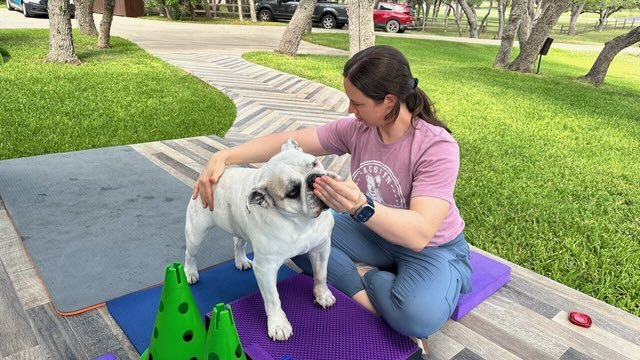
Virtually all strength-building programs, whether they are designed for dogs or people, are built on the fundamental principle of progressive overload. Simply put, this idea involves gradually increasing the challenges placed on the body over time.
When done correctly, muscle fibers will adapt and grow. If progressive overload is not used, strength and stability improvements just don’t happen.
In some ways, progressive overload is much easier to execute with humans. A personal trainer can detail a program, including details like the number of sets and reps, the weight to be used, and how many days in between workouts. Then, the person can go off and follow that routine. With dogs, it’s more complicated. You can’t just tell your dog what to do, so you need to guide them through the process of progressive overload directly, perhaps with the help of a certified canine rehabilitation therapist. (1)
How Do Dogs Build New Muscle Fibers? (And How Long Does It Take?)
The process of building muscles in dogs is the same as it is in humans, and to some extent, it is counterintuitive. To build muscle tissue, existing muscle fibers need to be torn during exercise. (2) Lifting a weight will cause tiny tears, and when those tears heal, the muscle will be slightly stronger. Over time, when executed properly and consistently, a significant gain of muscle mass is possible.
Where things often go wrong in this process is that many dog owners assume that harder always equals better. As a result, they push too fast and ask too much of their dog. In the end, an injury is likely, or a compensation that leads to other health problems. Only when exercise difficulty is built up gradually over time will dogs and their owners enjoy sustainable results. No gains are immediate in the fitness world, but you might notice improvements in your dog after just a couple of weeks or consistent work, with more notable outcomes present after months have passed.
Why Should Dogs Master Stable Surfaces Before Unstable Ones?
Stable surfaces are best for building the foundational skills that are needed to perform exercises properly and safely. If you were to start a dog on a new exercise routine and go immediately to an unstable surface, you might cause unwanted outcomes like poor motor patterns, excessive wobbling, or compensations. Don’t make this mistake, especially if your dog is recovering from an orthopedic surgery or neurological injury.
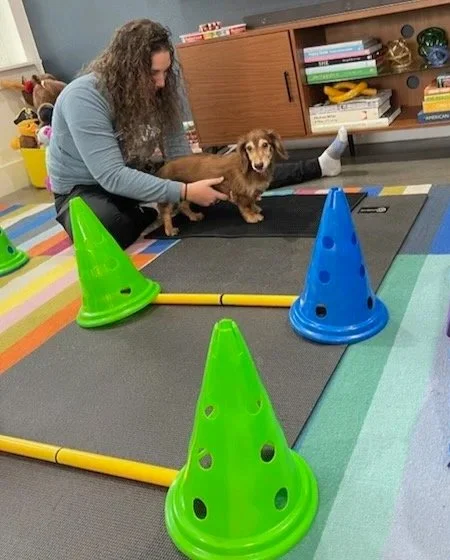
The progression should always start with stable surfaces like the floor or short-pile carpet. Later, semi-unstable surfaces like foam pads can be introduced for an additional level of challenge. Ultimately, things like unstable cushions and wobble boards can be used to promote higher-level balance and core engagement, but only when the dog is completely ready for such work. (3)
What Are the Signs You’re Progressing Your Dog’s Exercises Too Quickly?
If you are putting your dog through exercises on your own, it’s important to watch for signs that you are moving too fast. If you pay attention, you can see indications that you might be doing too much, and you can back off the intensity of the exercise program accordingly.
Red flags to watch for include changes in posture, limb trembling, or shifting weight away from the working leg. Your dog might also start slowing down faster than normal, or pant excessively during the exercise session. And, of course, if you see your dog in obvious pain, stop what you are doing and reassess. Remember, the quality of the exercise matters more than the quantity, so always err on the side of caution and be patient with progress.
How Can a Canine Rehab Specialist Create a Safe and Effective Exercise Plan?
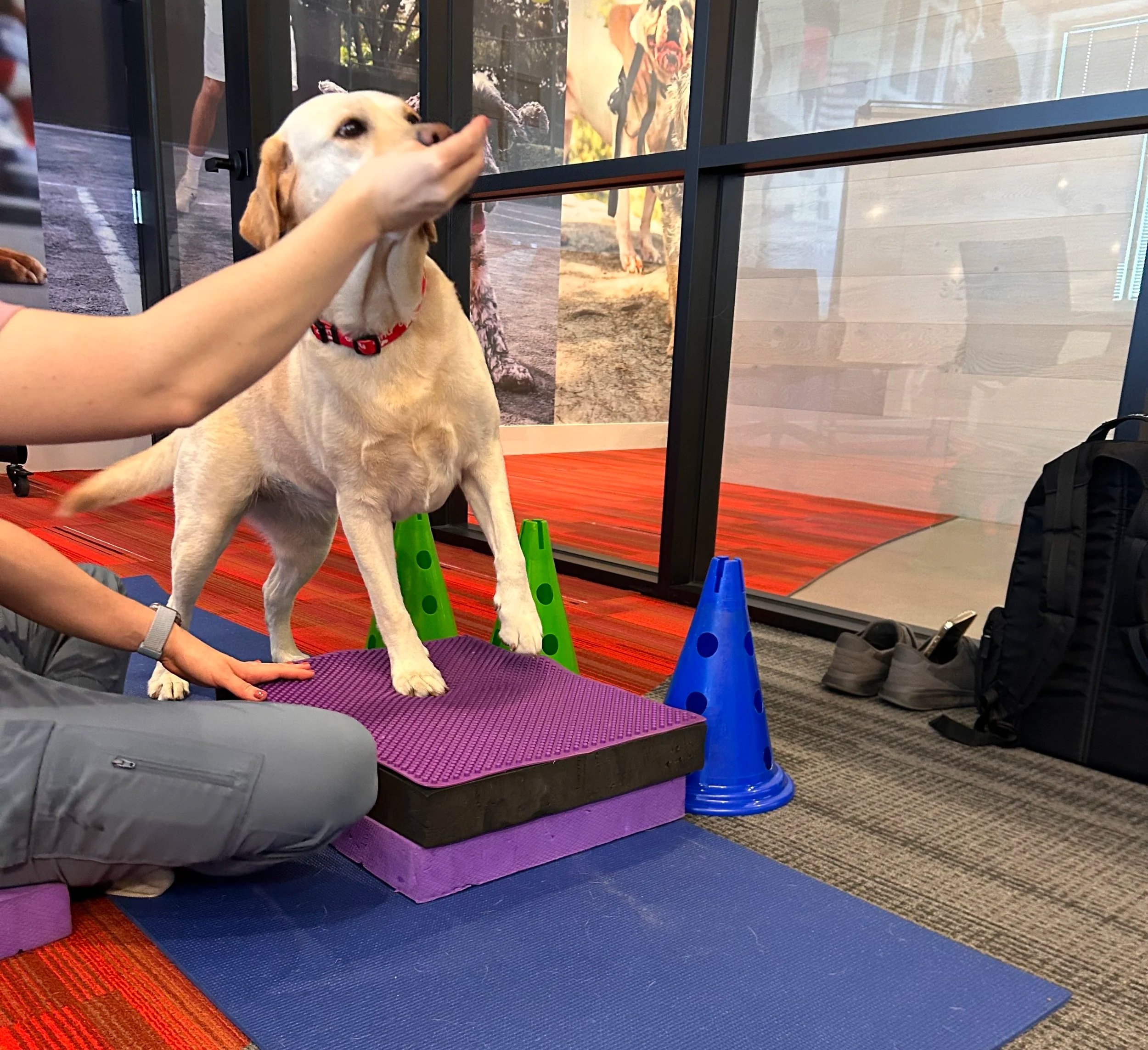
The training and experience held by a canine rehab specialist, like those on the team at Austin Canine Rehab, is invaluable. Professionals in this field know how to build custom exercise plans that take into consideration a variety of factors about each dog. By observing the dog’s gait from different angles, assessing muscle symmetry, testing neurological responses, and more, a canine rehab specialist will be able to construct the ideal plan for long-term health.
To learn more about the services we offer at Austin Canine Rehab, or to schedule your first appointment for your dog, please give us a call today. We would love to serve you and your pet!
Frequently Asked Questions
-
Most dogs will benefit from a progression that moves forward every one to two weeks. Of course, that depends on how the dog is responding to the exercise, so it’s important to be flexible and adjust as necessary.
-
Advancing the difficulty of exercises too quickly is easily the biggest mistake we see. Pushing through hard exercises before the dog is ready can lead to new injuries or create imbalances that lead to other issues later on.
-
Visible muscle changes will take at least several weeks, if not months, to appear. However, there will typically be neuromuscular improvements like better balance or smoother transitions that appear much faster.
-
Yes, overworking a tired or healing tissue can cause soreness and lead to a longer overall recovery timeline. Rest should always be seen as a key part of the strengthening process.
-
Exercises on unstable surfaces are not suitable for all dogs. Specifically, dogs dealing with neurologic or orthopedic issues may need to spend longer doing exercises on stable surfaces before gradually progressing to unstable equipment.