

Red Light Therapy vs. PEMF for Dogs: How Are They Different?
Both red light therapy and PEMF have become rather popular treatment options for dogs in recent years. If you’ve been considering one of these treatments, it’s important to understand exactly what they have to offer. That’s what we’ll dive into on this page, so explore the content below to educate yourself on the possibilities.
Quick Answer: Is PEMF the Same as Red Light Therapy for Dogs?
No, PEMF and red light therapy are different modalities. Red light therapy, or photobiomodulation, uses specific wavelengths of light to influence cellular activity.

On the other hand, PEMF uses pulsed electromagnetic fields to affect tissues. Both of these treatments are passive, non-invasive options with a growing body of veterinary evidence behind them.
Red Light Therapy vs. PEMF for Dogs at a Glance
| Red Light Therapy | PEMF | |
|---|---|---|
| Energy Used | Light | Pulsed electromagnetic fields |
| Contact Required? | Depends on device | Depends on device |
| Common Formats | Laser units, LED panels, pads, wands | Mats, loops, targeted applicators |
| Passive Treatment? | Yes | Yes |
| Professional and Consumer Options Available? | Yes | Yes |
| All Devices Equivalent? | No, devices vary significantly | No, devices vary significantly |
| Does Dose Matter? | Yes, dose is critically important | Yes, dose is an important factor |
| Role at ACR | Not the selected in-session modality | Used as a supportive modality |
| Replacement for Therapeutic Exercise? | No | No |
What is Red Light Therapy for Dogs?
Red light therapy is a consumer term that is used to describe a wide range of products. These products include handheld wands, flexible pads, blankets, panel lights, and more. Most of them emit red or near-infrared wavelengths of light, and they are marketed to dog owners who want to help their pets deal with anxiety or arthritis, among other things. While the term “red light therapy” is commonly used, the more accurate name is photobiomodulation, which is sometimes abbreviated as PBM.
What is Photobiomodulation?
Photobiomodulation works by delivering specific wavelengths of light to tissues in the body. Photons interact with light-sensitive molecules in the mitochondria to stimulate cellular energy production and hopefully reduce inflammation, promote tissue repair, and calm pain signaling.
Does Red Light Therapy Work for Dogs?
In certain contexts, it has been seen that photobiomodulation can be beneficial for dogs. Research has shown positive results in areas like post-surgical recovery, wound healing, and arthritis pain management. It’s important not to overstate these findings, however, as results can vary wildly, and what works for one dog may not work effectively for another. Red light therapy should not be seen as a one-size-fits-all solution to everything that plagues your dog, but it may be able to play a meaningful role in an overall treatment plan.1
Are At-Home Red Light Wands and Blankets the Same as Veterinary Red Light Therapy?
In a word, no. If you are interested in using red light therapy for your dog, you should not expect to get the same results from an at-home product as what a vet can provide. With professional equipment, specific wavelengths can be delivered to particular tissue depths over prescribed amounts of time. These devices are maintained properly, and a big part of the treatment process is the expertise held by the individual using the equipment.
Things look a lot different when you are talking about consumer red light devices. These come in the form of various wands, blankets, and LED pads, and what the devices can provide varies significantly from one to the next. Many do not emit the kind of power output or tissue penetration that is needed to achieve meaningful results. That does not mean that every consumer device is without value, but dog owners should proceed carefully in this area.
What is PEMF Therapy for Dogs?
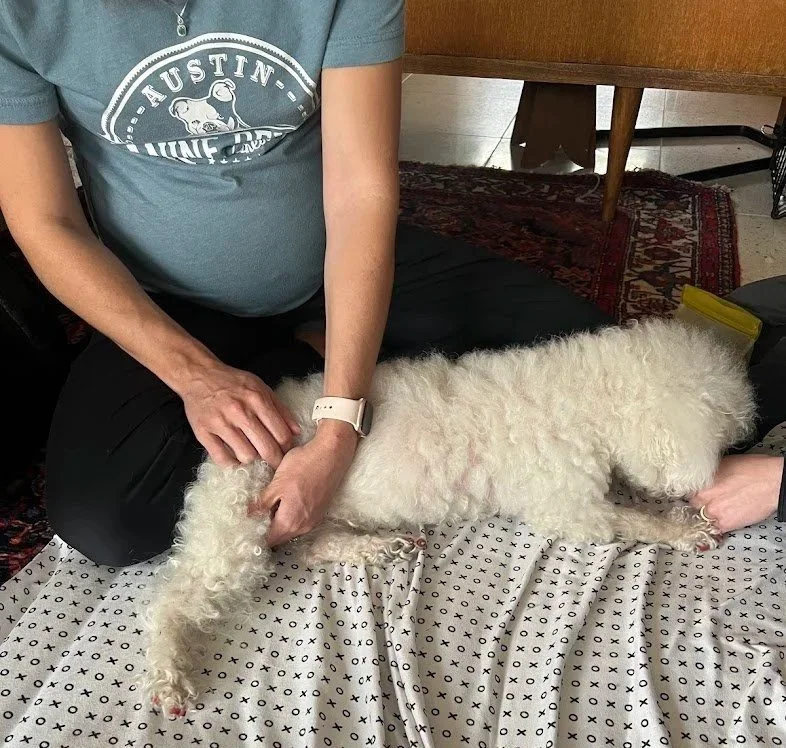
Pulsed electromagnetic field therapy uses low-frequency electromagnetic fields to influence cellular activity without generating any heat. Some of the reported effects of PEMF include improved microcirculation, decreased pain, and better tissue oxygenation. As with red light therapy, there can be significant variation in the treatment parameters, as not all PEMF devices operate in exactly the same way.2
Why Does Austin Canine Rehab Use PEMF Instead of Red Light Therapy During Sessions
At Austin Canine, we have decided to use PEMF based on the growing body of scientific evidence aimed specifically at canine applications. We feel confident using this modality thanks to strong trials that speak to what PEMF can do when provided by a trained practitioner. Also, as a mobile, in-home practice, PEMF is a treatment that can be delivered effectively in a variety of settings, which makes it more practical as something that we can offer to our clients. 3
It’s important to note that our choice of PEMF does not mean we are against red light devices. If you have been using a red light device with your dog and you feel like some benefit has been achieved, we can certainly discuss that and determine how it fits into the bigger treatment picture.
Can I Use Red Light Therapy at Home If My Dog is Getting PEMF During Rehab?
These two forms of treatment don’t inherently conflict with each other, so you may be able to use both with your dog. Before doing so, start by talking with your vet about the idea to make sure everyone is on the same page and that no potential issues exist that you need to consider.
Also, note that the specific device you are using matters tremendously. Not all consumer red light products are going to deliver a dose that actually reaches a meaningfully deep tissue layer. And, simply reading instructions on a consumer package is not the same thing as having guidance from a veterinarian on how to apply red light therapy effectively. The more you can have a professional involved in this process, the better the outcomes you can expect.
Is PEMF or Red Light Therapy Better for Dogs?

There is no one answer to this question, as neither is universally better. These are different modalities with different delivery methods. Comparing them is only useful in terms of trying to decide which one is the right fit for your dog at this time.
When Professional Photobiomodulation May Be Considered
Conditions that may call for the use of red light therapy include post-surgical soft tissue healing, wound management, osteoarthritis, and certain neurologic recovery situations. When going in this direction, remember that professional-grade equipment that has been set to the right parameters is far different from using an at-home device.
When PEMF May Be Considered
This can be an excellent supportive modality when trying to manage chronic arthritis, recover from surgery, or when dealing with various musculoskeletal conditions. You can work directly with the team at Austin Canine Rehab to determine how best to incorporate PEMF into a treatment plan.
Why the Rest of the Rehabilitation Plan Matters More Than Choosing a Gadget
While both red light therapy and PEMF have their uses, neither will rebuild muscle, teach a new movement pattern, or progressively increase load. Those are all things that are done as part of a canine rehab treatment program, which is why such a plan remains at the heart of long-term recovery. Passive modalities can support progress and should not be ignored, but they also shouldn’t be seen as a standalone solution.
Don’t Let the Device Become a Treatment Plan
It feels good to reach for something tangible like a red light device when you know your dog is in pain or struggling to move. It feels like you are actively doing something when you provide them with such a treatment, but that device alone is insufficient. You need professional advice, proper exercises, environmental modifications, medication, and more to have the whole picture in place. Reach out to Austin Canine Rehab today if you’d like to learn more about what we offer.
Frequently Asked Questions
-
No, these are two different treatment modalities. Both aim to promote cellular activity, but PEMF does it with pulsed electromagnetic fields while red light therapy uses specific wavelengths of light.
-
There is some peer-reviewed veterinary evidence that red light therapy administered by professionals can help with wound management, post-surgical healing, and osteoarthritis pain.
-
Several studies point to the positive effects that PEMF can deliver for dogs with osteoarthritis. It has also been shown to offer benefits in post-surgical recovery, including improvements in gait symmetry, pain scores, and wound healing.
-
Low-power LED red light products are generally considered low-risk when used as directed. However, just because it is safe does not mean it will be effective. Follow guidance from your veterinarian for the best results.
-
Consumer devices differ significantly from veterinary laser therapy equipment. Evidence that points to the value of red light therapy with professional equipment can’t be automatically translated to consumer products.
-
It’s possible to use both of these modalities, as they work through different mechanisms. The most important piece of the puzzle is to talk to your veterinarian about any plans for these treatments and make sure it’s appropriate for your dog.
-
Both of these treatments have shown potential in the area of canine osteoarthritis. With that said, neither of these treatments should be considered “better”, as the right choice is going to depend on factors like available equipment, the dog’s condition, and what is recommended by the vet.
-
No, these treatments are not replacements for canine rehabilitation. Canine rehab works to rebuild muscle, retrain movement, and improve balance, none of which are going to be accomplished using PEMF or red light therapy.
-
Start the process by having a conversation with your veterinarian. You should ask whether or not these modalities are appropriate for your dog’s condition, and if they are, ask about what specifications you should look for before purchasing any at-home product.