It’s unsettling to see that something is wrong with the way your puppy is moving. Sometimes, young dogs will move awkwardly just because they are learning their bodies and how to control them, so strange movements aren’t always a sign of concern. It could just be clumsiness or a growth spurt. However, it’s also possible that hip dysplasia is to blame, in which case, you’ll need to understand that condition and how it can be treated.
Understanding Canine Hip Dysplasia in Puppies
Canine hip dysplasia in puppies is a developmental condition. In this condition, the ball and socket of the hip joint does not align properly or does not develop correctly. Rather than moving smoothly as it should, the joint may have looseness or instability. [1]
As you might expect, this condition impacts how your dog can use his or her hind end, especially during the growing phase of life. In fact, the joint can become more unstable as the puppy grows, leading to pain, inflammation, and changes in their pattern of movement.
While it’s concerning to see your puppy struggle with this condition, know that it is a very common orthopedic developmental condition, especially in large breed dogs. With early diagnosis and proper management, potentially including both veterinary care and canine rehabilitation, puppies with this condition can grow up to live full, active lives.
Common Symptoms to Look For
There are many ways in which puppy hip dysplasia might start to show up in your dog. Perhaps the most recognizable symptom is known as the “bunny hop.” This is when a puppy will use both back legs together to run forward rather than alternating them as with a normal stride. While the bunny hop is a common indicator of hip dysplasia, there are plenty of other potential symptoms, including the following:
Difficulty getting up after resting or sleeping
Decreased interest in jumping, climbing stairs, or playing
Chronic or occasional lameness in the hind legs
Shifting weight forward onto the front legs
Unusual gait or stiffness in the hind end
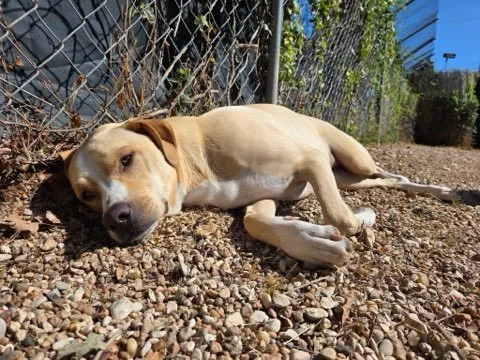
You might also notice that your puppy tires rather quickly when going for a walk. And, even if the dog is not in any noticeable pain, there can still be hip dysplasia in place, as it might manifest more as a mechanical instability than a source of obvious discomfort. [2]
Identifying Puppy Hip Dysplasia Symptoms Early
One of the most important factors in reaching a positive long-term outcome with puppy hip dysplasia is spotting the condition as early as possible. Unfortunately, some of the first warning signs are often written off by dog owners as just being a normal part of the growing phase.
If you notice that your puppy is limping slightly, or if their behavior has changed recently, don’t ignore those potential indicators of a problem. You might see them slightly hesitate before they jump up onto something, or you may see that they are stiff after activity. Pay attention to any of these patterns, and if they persist or get worse, seek attention from your vet so the dog can be examined, and a treatment plan can be established.
The Importance of Diagnosing Hip Issues Professionally
You aren’t going to be able to diagnose puppy hip dysplasia on your own. If you suspect that your puppy may be affected, a formal hip evaluation will need to be performed by a trained professional. The evaluation process typically involves a combination of physical examination and imaging at a veterinary clinic or animal hospital. [3]
During the assessment, things like hip stability, range of motion, and any signs of discomfort will be evaluated. It may be helpful to use X-rays to check on the joint structure and identify any hip laxity or early changes in the hip joints. However, while imaging is helpful, it is not the end of the story when it comes to this condition. Evaluating the movement of the dog, including any changes in gait, posture, and weight distribution, will help your vet arrive at a possible diagnosis of hip dysplasia.
How Canine Rehab Support Growing Puppies
Canine rehabilitation can play an important role in supporting puppies with this condition. Instead of focusing only on this specific joint, canine physical rehab will look at how the entire body is moving and compensating. At Austin Canine Rehab, we take pride in building custom plans for all of our clients, with those plans designed to improve strength, coordination, and stability. The plan we craft for your pet may include things like controlled strengthening exercises, balance and coordination work, guidance on activity management, and more.
Ready to learn more about what our team of Certified Canine Rehabilitation Therapists can provide? Reach out now to speak with a member of our friendly team or fill out our form and we’ll get back to you shortly. It would be an honor to serve you and your puppy!
Frequently Asked Questions
-
You may notice symptoms as early as 4-6 months, particularly in larger breeds. However, it’s common for the symptoms to be rather subtle and intermittent at first.
-
This term refers to a puppy running while using both hind legs at the same time, rather than alternating them as in a normal gait. This is often due to hip instability or discomfort.
-
Yes, it’s helpful for a puppy with hip dysplasia to get controlled exercise on a regular basis. The key is to avoid high-impact or uncontrolled activity.
-
Not necessarily. Some puppies will have instability with little pain, but the pain may get worse over time if the condition is not managed.
-
Not all cases of hip dysplasia in puppies require surgery. Sometimes, young dogs are able to manage this condition through canine rehabilitation, weight control, and medication.